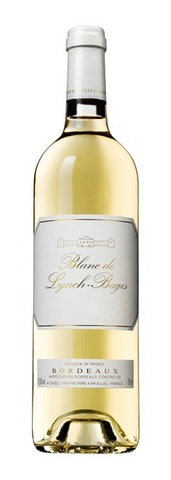
"Pale yellow in colour with green hues, the wine offers a particularly expressive nose with fine Sauvignon notes. On the palate, Blanc de Lynch-Bages 2019 is fresh with complex aromas of peach combined with white and exotic fruits. The mouth feel is round and fleshy with great aromatic persistence. 72%Sauvignon blanc, 22%Sémillon, 6%Muscadelle 6 Months iIn barrels on lees, 50% new wood."
Blanc de Lynch-Bages was first released in 1990 and is historically one of the first white wines produced by a Grand Cru Classé in the Médoc. The wine is made from a blend of the Bordeaux appellation’s three traditional white grape varieties: Sauvignon Blanc, Sémillon and Muscadelle. Approximately 75% of the juice is vinified in individually temperature-controlled barrels. As a result, the wines preserve their fresh aromas throughout the process. The wines are then stirred on lees on a regular basis and are aged for a period of six months before bottling. Characteristic of fine Bordeaux whites, Blanc de Lynch-Bages is bright and flavorful with citrus aromas in its youth and develops harmonious floral notes with ageing
The white harvest began on 11 September. The first Sauvignon Blanc was harvested in the wake of the month’s first rainfall. Picking then continued through to 17 September with the older Sauvignon Blanc, then the Muscadelle, and finally the Sémillon. The whites were harvested in the morning only, to preserve the grapes and protect their aromas from the high temperatures recorded at the time. Given the mild weather and because the grapes were healthy, our team of about forty pickers enjoyed stress- free harvesting conditions.
Upon arrival at the cellar, the average-sized berries gave clear, rich musts with a good concentration of aromas, particularly the Sauvignon. The Sémillon grapes were very dense. Since 2013, the technique chosen for handling the grapes as they arrive at the cellar has depended on the varietal and berry quality: direct pressing without de-stemming; direct pressing with de-stemming; or pressing after cold maceration for twelve hours using dry ice. Following fermentation, mainly in barrels (two thirds in barrels, one third in vats), ageing on lees began in October and ended six months later, just before bottling in April
